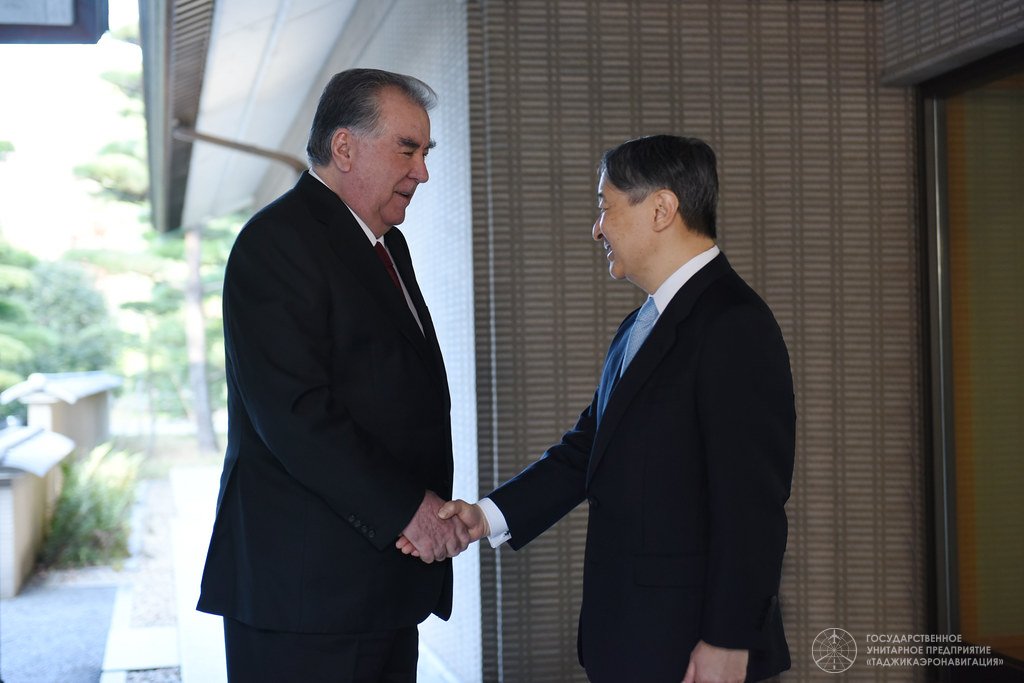
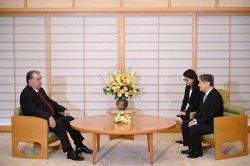
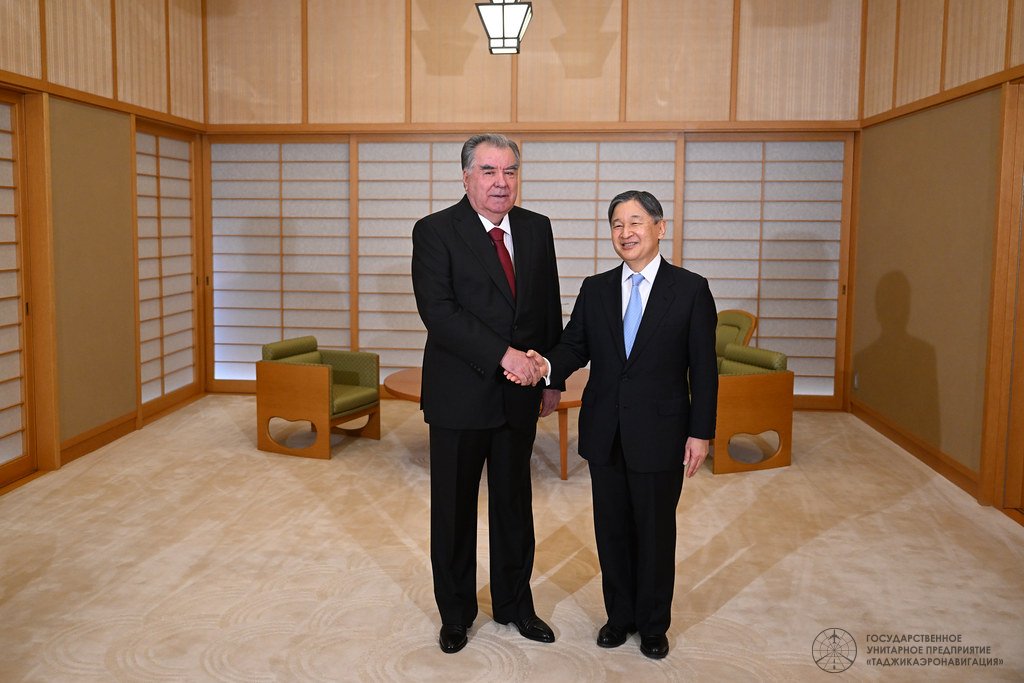
On December 19, the President of the Republic of Tajikistan, Leader of the Nation, His Excellency Emomali Rahmon, met in Tokyo with Emperor of Japan, His Majesty Naruhito.
The meeting discussed issues of Tajik-Japanese relations.
The President of the country, His Excellency Emomali Rahmon, expressed gratitude to the Emperor for the warm welcome and attention.
It was noted that Tajik-Japanese relations today cover a wide range of cooperation in the trade and economic, cultural and humanitarian sectors, and other areas of mutual interest.
Japan's support for the implementation of small and medium-sized projects in the infrastructure, transport, energy, agriculture, and environmental sectors, as well as training human resources, health and sanitation, was highlighted.
An exchange of views took place on other issues of mutually beneficial cooperation.
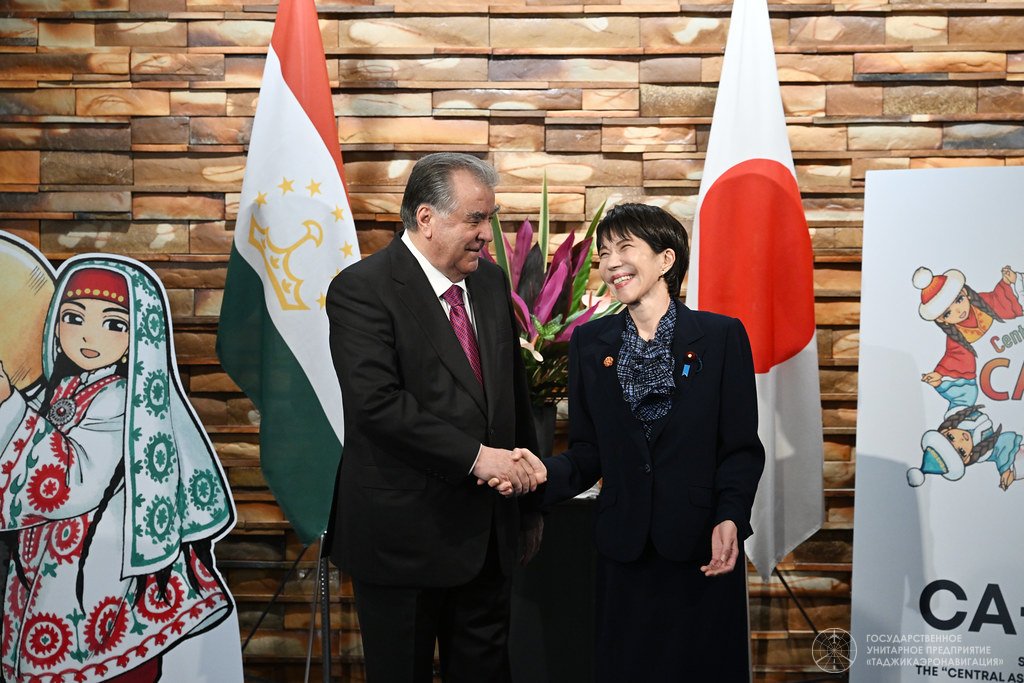
On December 20, the President of the Republic of Tajikistan, Leader of the Nation, Honorable Emomali Rahmon, met in Tokyo with the Prime Minister of Japan, Honorable Sanae Takaichi.
A wide range of issues of cooperation between Tajikistan and Japan were discussed at the meeting.
The President of the country, Honorable Emomali Rahmon, expressed his gratitude to Mrs. Sanae Takaichi for the warm welcome and high level of organization of the Summit of “Central Asia + Japan” Dialogue.
The sides reviewed the issues of cooperation between the two countries.
Great attention was paid to the activities of the Intergovernmental Commission, the development of interparliamentary dialogue, and the effective activities of the Interparliamentary Friendship Group.
The deepening of cooperation in the trade, economy, and investment sectors, the implementation of socio-economic and infrastructure projects in Tajikistan were among the important topics of the meeting.
An exchange of views took place on attracting Japanese investment, technologies, and preferential loans, and the participation of leading Japanese companies in the establishment of joint industrial ventures in the fields of electronics, automotive, pharmaceuticals, mineral processing, and agriculture.
It was proposed to adopt a Program of Trade and Economic Cooperation for the next three years (2026-2028).
Particular attention was paid to collaboration in the field of the “digital economy” and artificial intelligence.
The involvement of Japanese companies in the development of deposits, the establishment of joint ventures in the fields of processing cotton, cocoons, vegetables and fruits, and medicinal plants was considered necessary.
The tourism sector, including ecological, mountaineering, and recreational tourism, the cultural and humanitarian sectors, especially education, were named as promising areas of cooperation.
Interest was expressed in increasing the share of scholarships for training specialists in the fields of medicine, aviation technology, information security, and environmental protection.
The active cooperation between Tajikistan and Japan in international and regional organizations, especially the United Nations, and support for each other's initiatives within their framework were highlighted.
It was noted that we recognize the countries of East Asia as important partners in addressing global issues, including climate change, food security, and the fight against diseases.
At the end of the conversation, the President of the country, Honorable Emomali Rahmon, invited the Prime Minister of Japan to pay an official visit to Tajikistan.
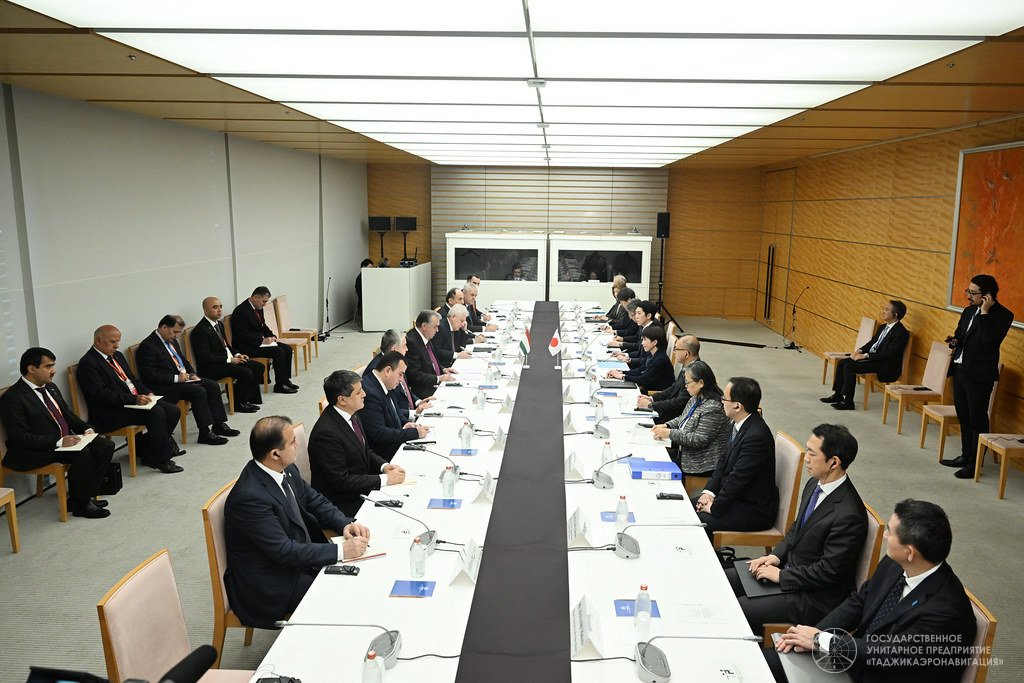
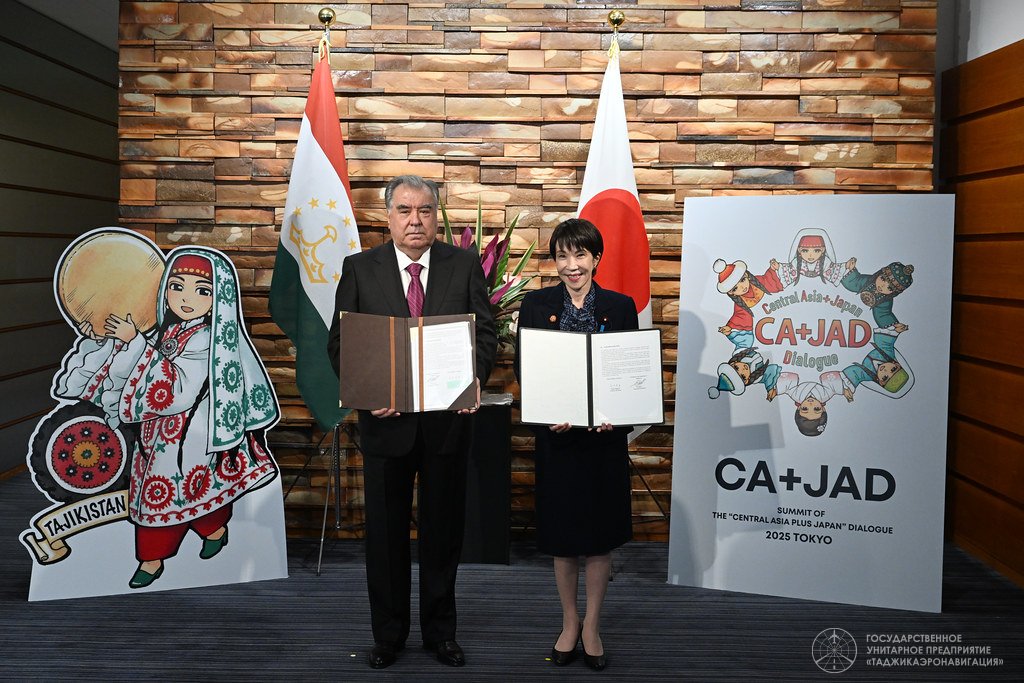
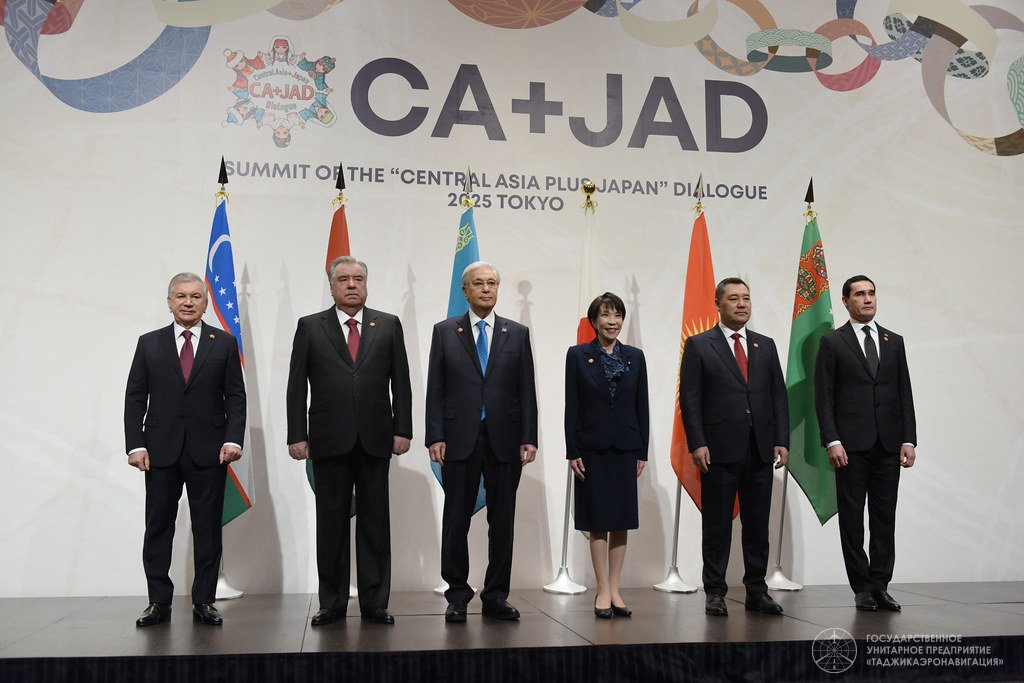
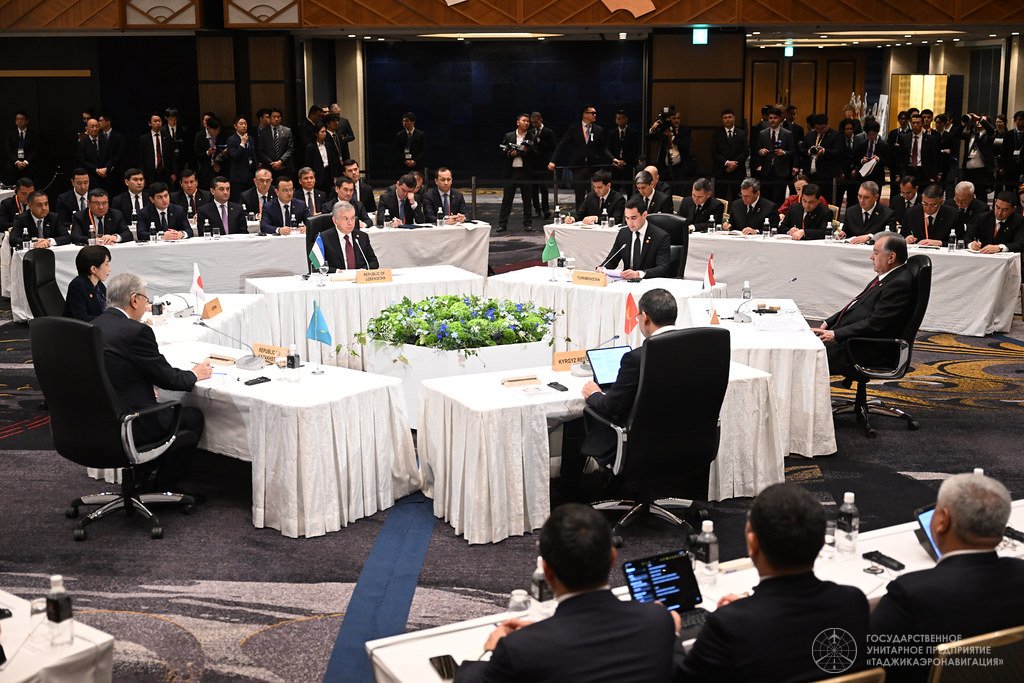
On December 20, the President of the Republic of Tajikistan, Leader of the Nation, Honorable Emomali Rahmon, participated and spoke in Tokyo, Japan, at the Central Asia plus Japan Dialogue Summit.
The President of our country, Emomali Rahmon, first of all, expressed his sincere gratitude to the Government of Japan for supporting the implementation of projects in the fields of economy, infrastructure, transport, energy, agriculture, ecology, health, education, and sanitation.
Given the key importance of the “green” economy for achieving the Sustainable Development Goals, Emomali Rahmon welcomed the attraction of Japanese capital and technology for the implementation of strategies of the countries of the region in the field of “green” energy, including the development of hydropower potential, as well as the real sector of the economy of Tajikistan.
It was noted that in this direction, in our country, the policy of transition to “green” industry, as well as the use of innovative and environmentally friendly technologies in key sectors of production, is being actively pursued.
It was emphasized that in the context of new economic realities, industrial relations and mutual cooperation between business structures should undoubtedly be aimed at further development and ensuring economic stability of our countries.
Japan's contribution to the implementation of small and medium-sized projects in our country was highly appreciated, and Japan's participation in the implementation of large-scale projects in Tajikistan, which have national and regional significance, was considered necessary.
Honorable Emomali Rahmon named the hydropower, mining industry, light and food, chemical and pharmaceutical industries, mechanical engineering and metallurgy as priority sectors.
Taking into account the vast natural resources, the Head of our state, Honorable Emomali Rahmon, expressed Tajikistan's readiness for broad cooperation with its Japanese partners in their extraction and processing.
Much attention was paid to the issues of climate change, floods, droughts, dust storms, mudslides, and destruction of ecosystems.
“We understand well how important it is to protect water resources as a source of life, food security, energy and sustainable development,” - said the President of our country, Emomali Rahmon.
In this context, it was noted that our country is a leader in promoting water diplomacy.
Emomali Rahmon called on all interested countries to actively participate in the work of the High-Level International Conference within the framework of the “Dushanbe Water Process” to be held in May 2026.
Emomali Rahmon expressed his interest in cooperation in the areas of biodiversity conservation, waste management, and climate change adaptation.
It was highlighted that our country is particularly interested in digital technologies and artificial intelligence, as these areas open up new horizons for conducting scientific research, monitoring the environment, and improving the quality of resource management.
In connection with our country's initiative to adopt a special UN resolution entitled "The role of artificial intelligence in creating new opportunities for sustainable development in Central Asia", the support and assistance of Japan and other partner countries was considered appropriate.
The President of our country, Emomali Rahmon, emphasized that Tajikistan, as a landlocked country, attaches particular importance to the development of logistics and transport connectivity.
It was also said that the improvement of road and railway infrastructure, the expansion of air links and the introduction of digital logistics projects - all this creates new opportunities for the development of trade, investment, and the economy in the region.
It was proposed to build logistics centers in the border regions of the North and South of the country to develop transit cargo transportation, both logistics centers and agro-logistical complexes.
Honorable Emomali Rahmon called Japan a reliable partner of Tajikistan in education and training of personnel through JICA programs and JDS scholarships.
A number of directions were identified and proposed to expand effective cooperation with Japan, including improving the professional level of specialists, training and education of technical personnel in industrial sectors and introducing "green" technologies, establishing scientific and research laboratories in hydropower, sustainable agriculture, and natural hazard management.
In his closing remarks, the President of the Republic of Tajikistan, Leader of the Nation, Honorable Emomali Rahmon, stated that all the proposals presented today at the Summit reflect our collective efforts for peace, stability, mutual respect, and sustainable development.